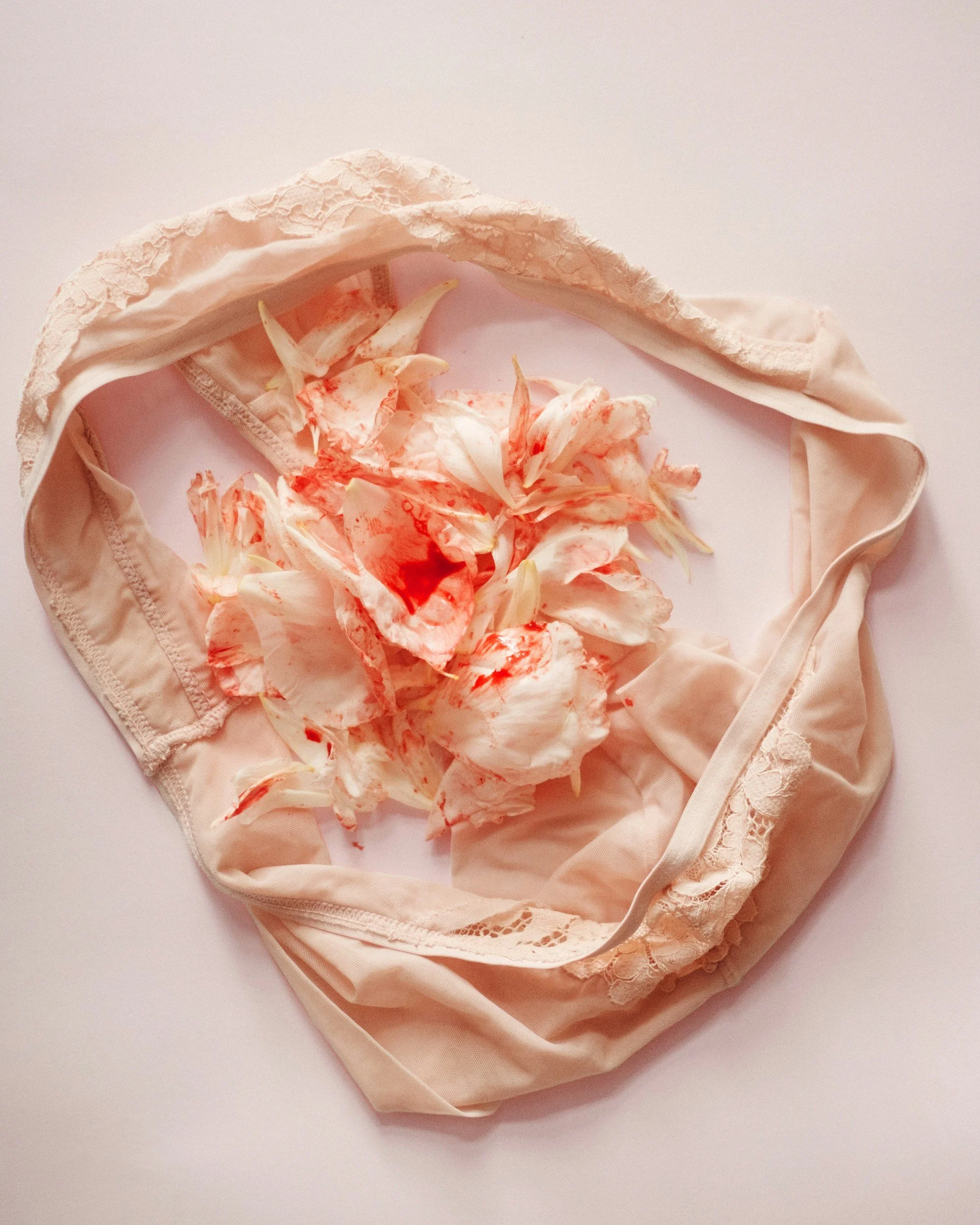
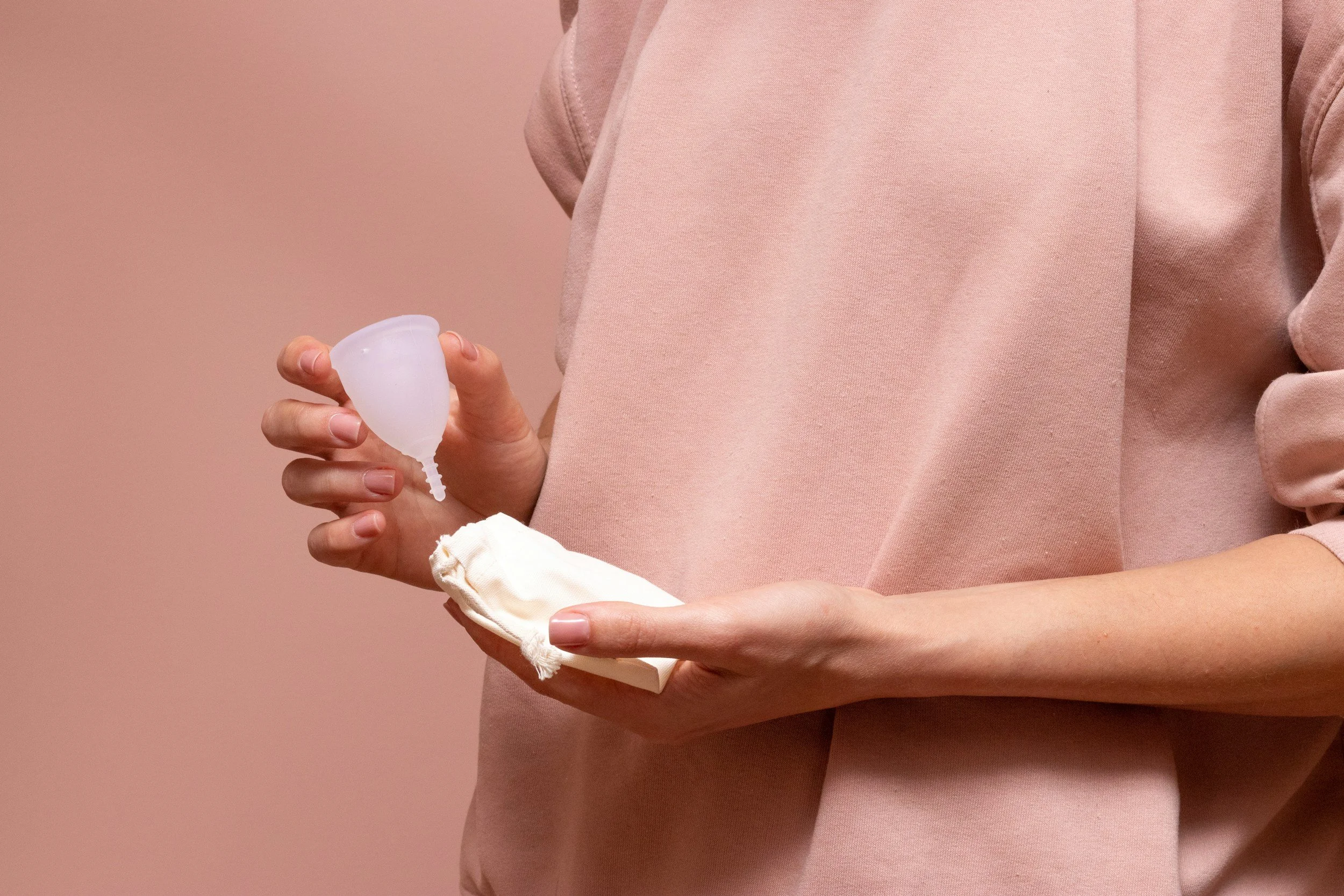
Periods are natural; 1.9 billion people have them, so products should also be natural and accessible
Period Products, Period
Health and Mental Health
What is Period Provery?
Period poverty refers to inadequate access to safe, hygienic menstrual products, clean water, sanitation facilities, waste disposal, and accurate menstrual health education. It also includes the impact of stigma, taboos, and discriminatory norms that limit people’s ability to manage menstruation with privacy and dignity.
Key elements usually highlighted are:
Inability to afford or access pads, tampons, cups, or local alternatives.
Lack of private toilets, washing facilities, and waste bins in homes, schools, workplaces, and public spaces.
Key Impact Areas
Education
Economic and Financial
Global scale and patterns
Roughly 1.9 billion people menstruate globally, and estimates suggest over 500 million struggle to manage their periods safely and with dignity each month. The burden is heaviest in low‑income and humanitarian settings, but significant unmet need is also documented in high‑income countries, including the United States and parts of Europe.
According to Breaking the Cycle: Addressing Period Poverty as a Critical Public Health Challenge and Its Relation to Sustainable Development Goals (Tohit and Haque 2024), published in PubMed Central,
Between puberty and menopause, adolescent girls and women experience around 459 menstrual cycles, averaging about 6.25 years of managing menstruation [1]. This results in a considerable monthly requirement for supportive social and physical settings to handle menstruation effectively. Adolescence, particularly with the onset of menstruation, represents a pivotal period in one's life [2]; exposure to various physical [3] and psychological [4] risks affects long-term health and well-being. Dealing with menstruation in challenging environments during adolescence can heighten girls' susceptibility to sexual violence, stigma, and discrimination, impacting their future health and well-being.

Period poverty remains highest in low-income countries, but significant product insecurity and facility gaps persist across all income levels
Health and Mental Health Impacts
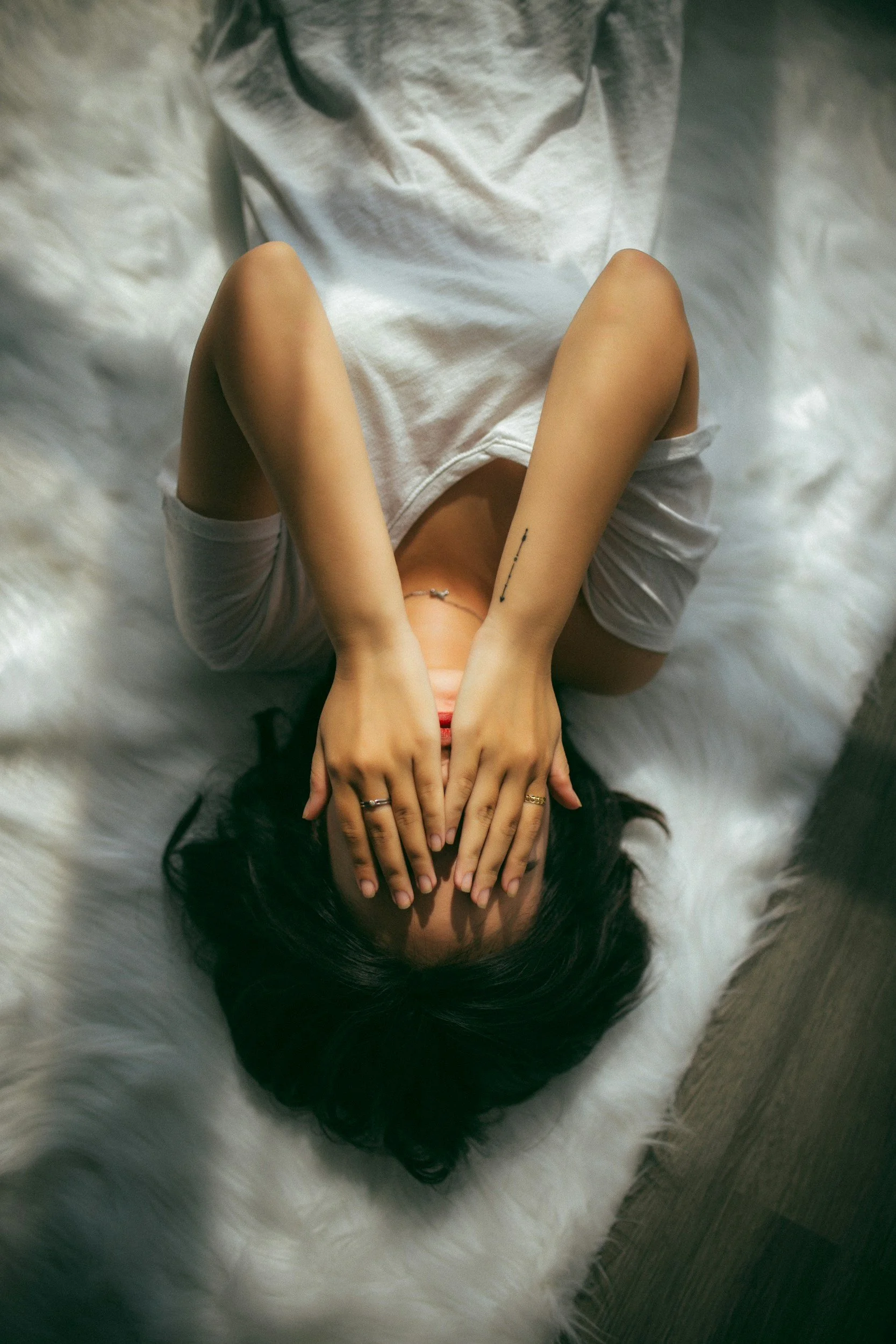
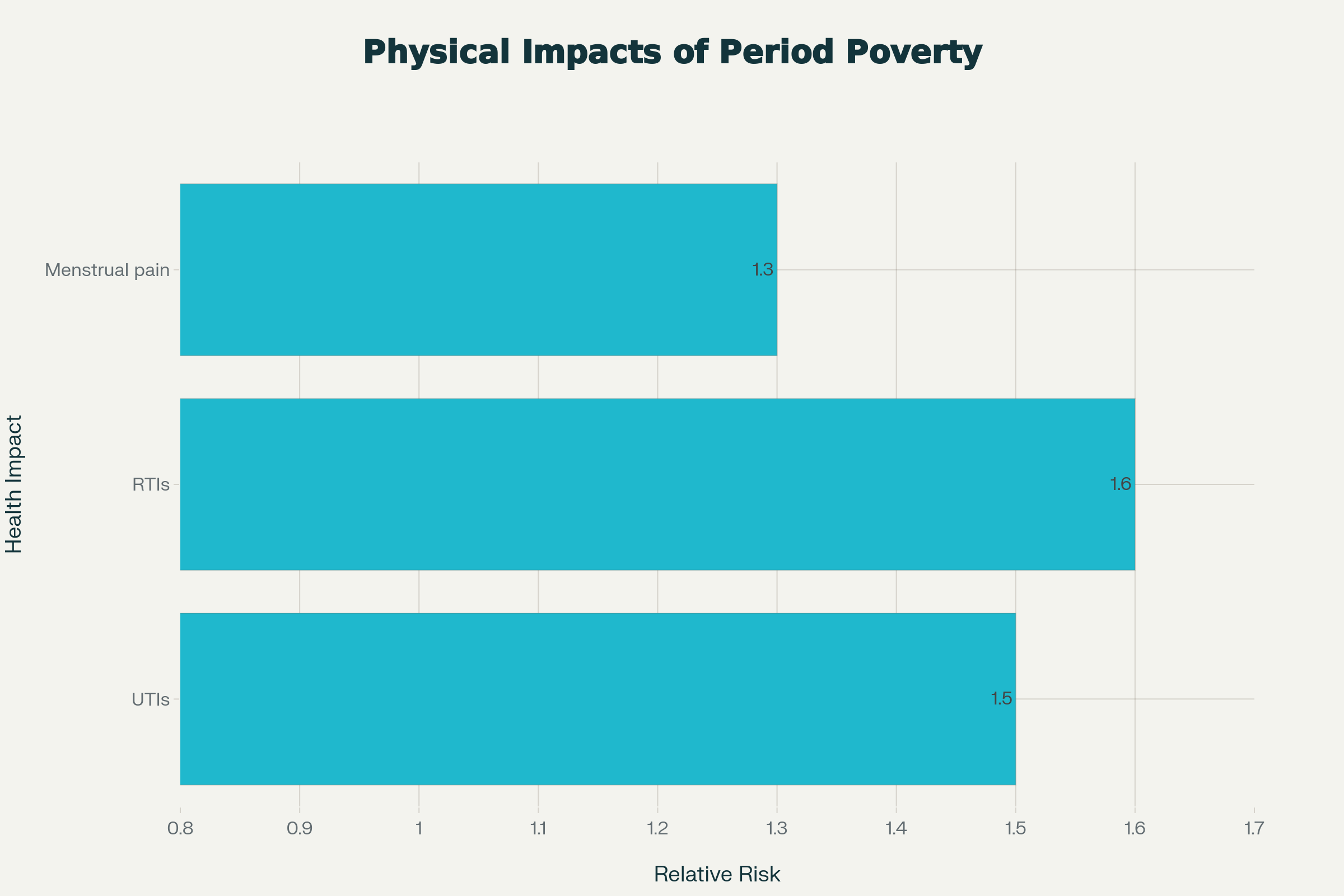
Using improvised or unclean materials (such as rags, paper, or other absorbents) and being unable to wash or change regularly increases risks of urogenital infections and discomfort. Period poverty is also strongly linked with stress, shame, and reduced quality of life; in some studies, frequent period poverty is associated with markedly higher rates of moderate to severe depressive symptoms.
The constant anxiety about leakage, odour, or bullying contributes to social withdrawal and limits physical activity, work, and community participation. These effects often intersect with broader gender inequalities, reinforcing lower status and restricted autonomy for women, girls, and gender-diverse people who menstruate.
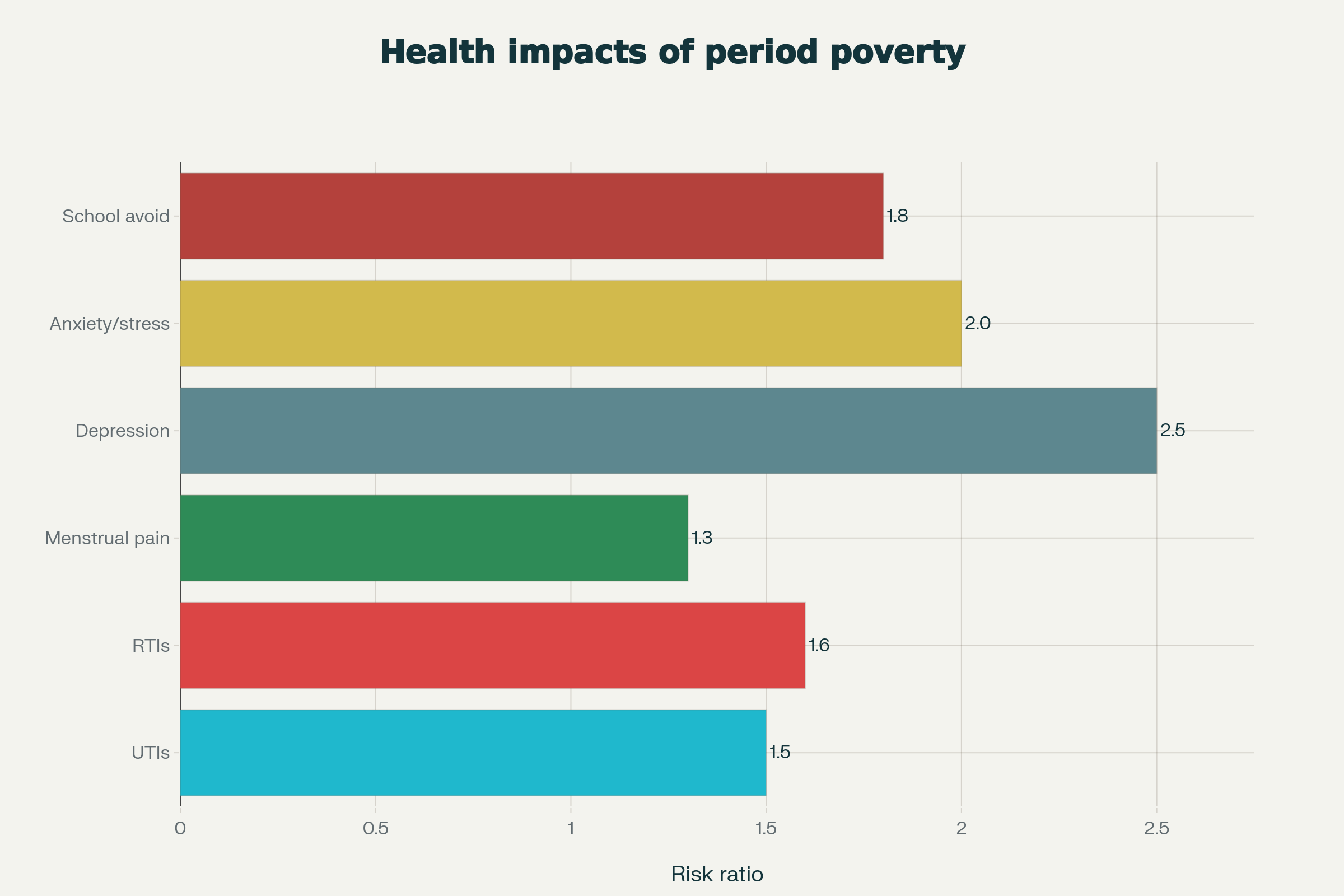
Period poverty is associated with higher risks of infections and menstrual pain or discomfort
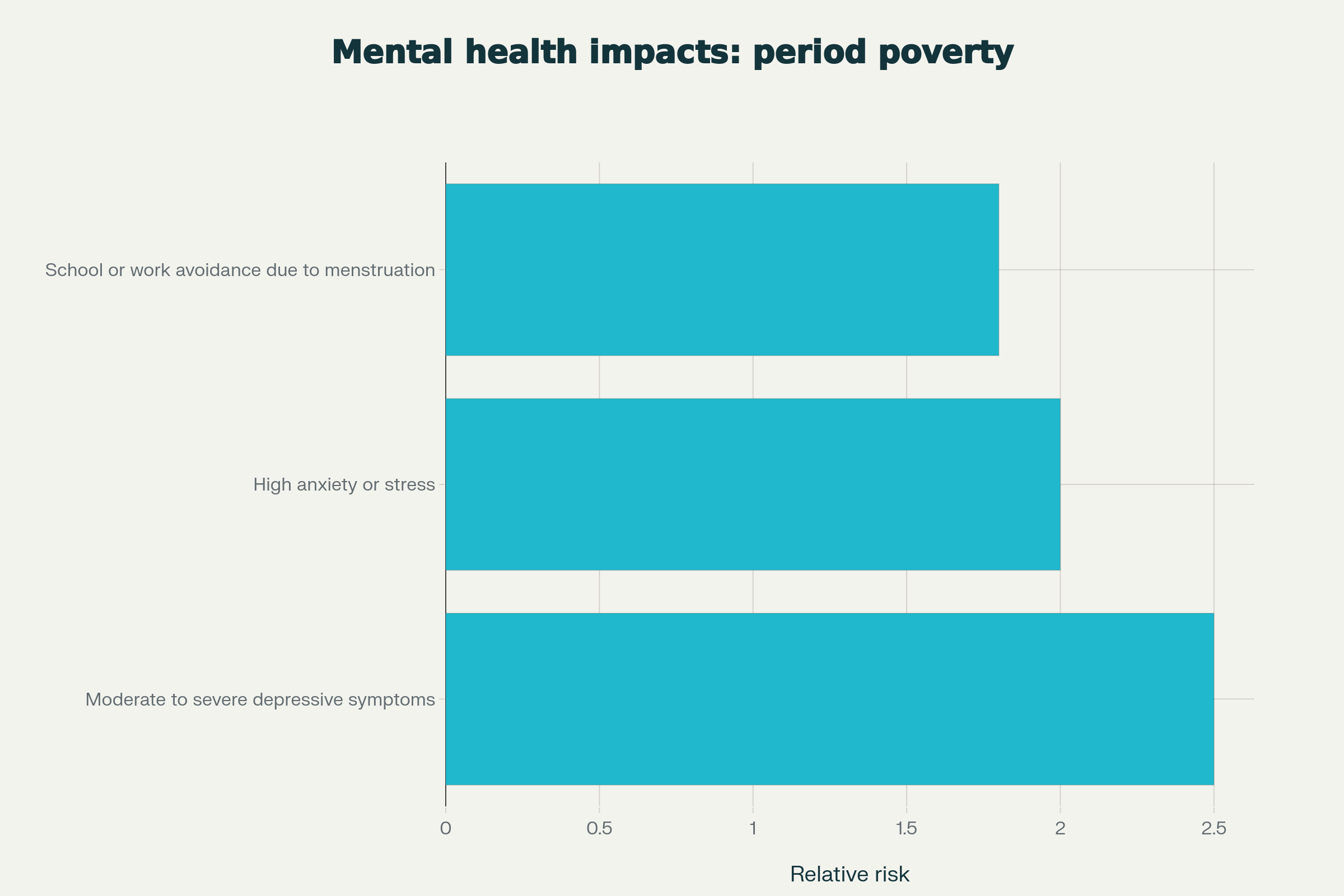
Period poverty is strongly associated with poorer mental health and increased avoidance of school or work during menstruation
Moderate to severe depressive symptoms are about 2–3 times more likely, and anxiety or high stress roughly twice as likely, among those experiencing regular period poverty.
School or work avoidance during menstruation is around 1.8 times more common, indicating substantial impact on education and livelihoods.
Education and Economic Consequences
Lack of products and inadequate school WASH (water, sanitation and hygiene) facilities lead many students to miss classes during menstruation or drop out earlier, especially in low‑income and rural settings. Evidence from several countries links period poverty to higher school absenteeism, poorer academic performance, and reduced completion of secondary education for girls.
These educational setbacks translate into lower lifetime earnings and economic participation, reinforcing cycles of poverty. In high‑income contexts too, surveys of adolescents and young adults report that cost-related product shortages interfere with school attendance, work, and concentration.
In many lower-income settings, large shares of schoolgirls lack adequate menstrual materials or facilities, with especially high absenteeism in some East African contexts
Values are synthesized, approximate figures drawn from UNESCO, UNICEF, World Bank and country studies (for example, estimates of around 10% of girls missing school during menstruation in sub‑Saharan Africa overall, but up to 50–60% in specific East African studies such as Uganda, Ethiopia, rural Ghana and Nigeria).
Across all shown regions, more than half of schoolgirls in many settings lack either adequate menstrual materials or a private, safe place to manage menstruation at school, indicating high structural period poverty.
East African case-study settings stand out with especially high reported menstruation‑related absenteeism (around half of schoolgirls in some surveys), while a broader composite of rural low‑income communities still shows roughly one‑third of girls missing school during their periods.
Links to Human Rights and SDGs
Researchers and global health bodies frame period poverty as a violation of rights to health, education, water and sanitation, work, and freedom from discrimination. Addressing menstrual health is considered necessary for achieving SDGs on gender equality, quality education, health, clean water and sanitation, and reduced inequalities.
This framing has prompted more governments and agencies to treat menstrual health as an essential component of universal health coverage and inclusive WASH, rather than a niche “women’s issue.”
-
Globally
It all begins with an idea. Maybe you want to launch a business. Maybe you want to turn a hobby into something more. Or maybe you have a creative project to share with the world. Whatever it is, the way you tell your story online can make all the difference.
-
Build it.
It all begins with an idea. Maybe you want to launch a business. Maybe you want to turn a hobby into something more. Or maybe you have a creative project to share with the world. Whatever it is, the way you tell your story online can make all the difference.
-
Grow it.
It all begins with an idea. Maybe you want to launch a business. Maybe you want to turn a hobby into something more. Or maybe you have a creative project to share with the world. Whatever it is, the way you tell your story online can make all the difference.